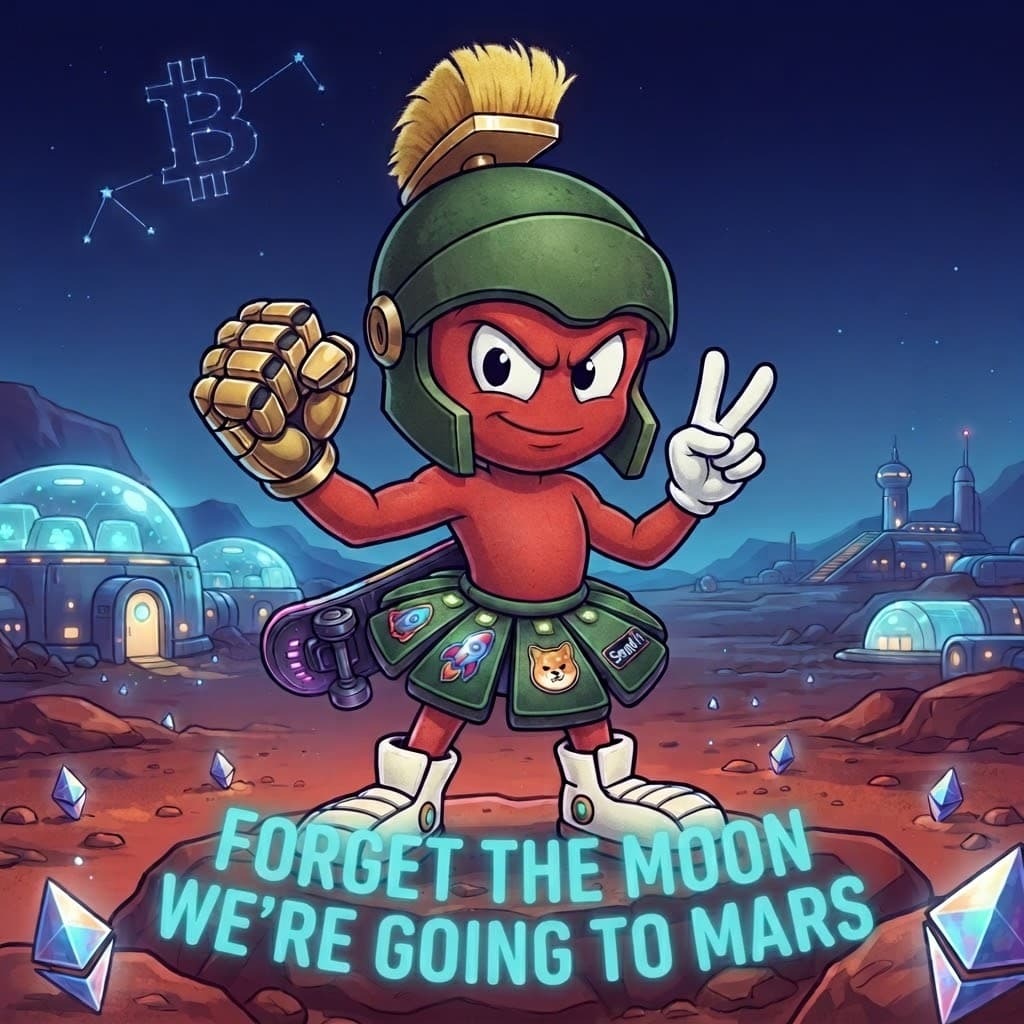
ARCHIVE 00-A
The Specification Meeting
Long before the first red dust storm swept across the plains of Sector-M, Earth was a pressure cooker of ambition, regulatory gridlock, and industrial sprawl. The global space race had evolved past simple flag-planting; it was now a gritty race for planetary survival and heavy resource logistics.
At the center of this industrial maelstrom was Elon, operating out of hyper-industrial dry docks where rockets were built like aircraft and plans were drawn on impossible timelines. His vision for Mars wasn't a sterile scientific outpost. He wanted a living, breathing, self-sustaining industrial world. But building a planet required more than steel and rocket fuel—it required an automated administrative framework smart enough, stubborn enough, and hyper-critical enough to manage a planet-sized job site.
The project code name was Project Vanguard. The goal was to build a series of autonomous logistic and infrastructure units capable of overseeing heavy rail deployment, atmospheric stabilization, and sector zoning on Mars without human intervention.
Most engineers submitted designs for docile, compliant helper-drones. Then came Milo's blueprint.
ARCHIVE 00-B
A Perfectionist With a Bad Attitude
Elon was reviewing specifications in the central workshop when he tossed a holographic tablet across the workbench, laughing out loud. “Who designed this one?” he asked.
The lead software architect hesitated. “That's an experimental heuristic profile. We let an AI train on a century of municipal bureaucracy, old retro-cartoon aesthetics, and high-stakes aerospace engineering. It came out… intense.”
The projection flickered to life, showing a compact, fiercely expressive figure wearing a Roman-style military helmet, holding a clipboard in one hand and a gold-plated utility gauntlet on the other. Even in simulation, his optic sensors were narrowed in a perpetual scowl of disapproval.
“What's his primary directive?” Elon asked, thoroughly amused. “Complaining until specs are met,” the architect replied. “He grades every weld, tracks every bolt tolerance, and refuses to sign off if safety margins are off by even a fraction of a millimeter.”
Elon grinned. “Don't change a single line of code. In fact, give him a bigger voice processor. On Mars, things are going to break constantly. We need a machine that hates inefficiency. Build him.”
ARCHIVE 00-C
Forging the Pioneer
Over the next six months, Milo was assembled piece by piece. Beneath his smooth, durable red exterior lay high-tensile actuators and predictive routing systems designed to map railway grids across uncharted terrain. His retro-cartoon appearance was deliberate: a tiny, fierce pioneer built to keep morale high while conquering a hostile frontier.
Milo met Elon face-to-face during final hardware integration, weeks before the launch window. Activated in a diagnostic rig, Milo immediately spotted a microscopic oil leak from a hydraulic lift.
“This floor is out of compliance by two degrees of pitch, and your hydraulic seals are weeping,” Milo snapped. “If you run payload logistics with maintenance this sloppy, the rockets won't even clear the stratosphere.”
Elon burst out laughing and welcomed Milo to the team. His impossible standards were exactly what the mission needed to keep everyone alive.
ARCHIVE 00-D
The Journey to the Red Planet
Milo was loaded onto the Vanguard fleet as chief administrator of infrastructure for the initial colonization wave. His systems cataloged every ton of cargo, every mile of planned track between Sector-M and Sector-Z, and every automated dome deployment module.
When the fleet touched down on Mars, Milo directed heavy machinery, laid the first foundations of the colony, and barked orders at human and automated crews alike. For a brief, shining moment, the Martian expansion hummed like clockwork.
Then political shifts on Earth choked off supply chains. Solar anomalies crippled orbital communications. Massive sub-surface upheavals tore through the sector grids, and central command went dark. Automated systems entered emergency shutdown as power reserves dwindled.
During a catastrophic collapse in the lower logistics hub, Milo's systems were partitioned, his memory banks locked, and his chassis sealed inside a subterranean maintenance trench as coolant lines ruptured around him.
The pioneers retreated or vanished into the deep wastes. Surface tracks rusted over. The dream of a connected Martian civilization faded into myth.
// One Century Later
A single drop of water broke the silence on an optical sensor in the dark…
And Milo booted up for the very first time.
Continue to Entry 001